Progress you can measure.
Physical therapy where you can see it working. Every patient leaves their first evaluation with a baseline number—strength, range of motion, and pain level—plus a written plan with milestones. Each session re-measures against that baseline, so progress is visible in the numbers, not just how the week felt.
Before the year turns
Late November is when benefits and deductibles get decided: many plans reset on January 1. People who already met a deductible this year can start rehab now while this year’s coverage is still in play. (General benefits information, clearly labeled. Verify your specific policy with our clinic).
Where does it hurt?
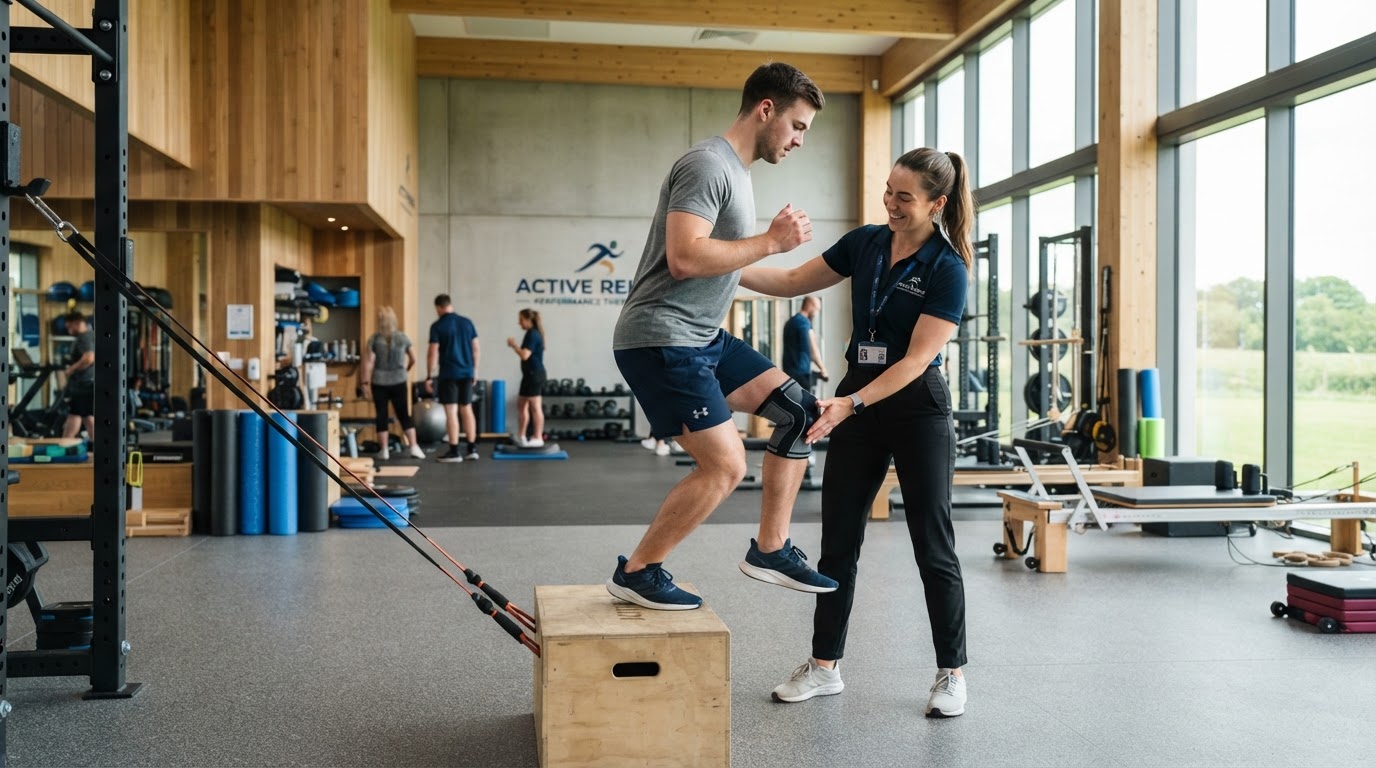
The Outcome Method
Four deliberate stages. No ambiguous visits, no open-ended commitments. Every phase is governed by objective physical benchmarks.
The first visit sets your baseline numbers.
We do not guess where you are starting from. Your evaluation measures exact range of motion, muscle strength dynamometry, and movement quality under load. You leave with those baseline metrics in hand so you know the starting line before treatment begins.
A written plan with milestones and a visit rhythm that fits your week.
You receive a structured roadmap with specific target numbers and functional checkpoints. We outline the expected frequency and timeline upfront, designed to integrate into your actual work and life demands rather than an endless schedule.
The same tests repeated every few sessions, with the plan adjusted when the numbers say so.
Progress is not measured solely by whether today feels slightly better or worse. We re-test your exact baseline metrics at regular intervals. When numbers move forward, we advance your load; if progress plateaus, we adapt the exercise stimulus based on data.
Discharge with a home plan and the strength to keep the result.
Physical therapy should have a definite endpoint. When your objective strength and range targets are met, you graduate with an autonomous home program and the physical resilience required to prevent re-injury and stay active.
Who it is for
Six distinct paths tailored for adults, 25 to 65, rebuilding after surgery or injury, athletes returning to sport, and patients whose benefits reset on January 1.
Post-surgical rehab
Protecting surgical repairs while systematically regaining joint range, muscle activation, and progressive load tolerance.
Back & neck pain
Isolating mechanical drivers, restoring spinal mobility, and building trunk endurance so daily sitting and lifting stop triggering flares.
Sports injuries
Rebuilding explosive capacity, tissue stiffness, and movement mechanics to bridge the gap between initial healing and full return-to-sport.
Shoulder & knee pain
Addressing tendon overload, patellofemoral tracking, or rotator cuff deficits with targeted resisted movement and joint articulation.
Balance & falls prevention
Retraining vestibular, visual, and somatosensory balance systems alongside lower-extremity power for grounded daily stability.
Work injuries
Targeting the specific ergonomic, repetitive stress, or physical demands of your workday with structured conditioning and mechanics.
Honest clinical triage: The evaluation determines whether this is the right care. Some problems need an orthopedic surgeon, neurologist, or specialized imaging first. If that is true for your condition, our practice will say so directly and guide you to the right specialist.
Your first evaluation: what happens, in order
A thorough 60-minute one-on-one clinical assessment. No waiting rooms, no being passed off to an assistant. Your clinician conducts every test.
1. Your history in your words
A focused conversation regarding your injury history, daily physical demands, what movements trigger flares, and your specific activity goals.
2. Movement & strength testing
Objective testing: goniometric joint angles, hand-held dynamometer force output, functional movement patterns, and symptom reproduction thresholds.
3. Your baseline numbers written down
Your data recorded clearly where you can see it: exact degrees of flexion/extension, pounds of force, and initial pain scores.
4. A plan with milestones & visit rhythm
An initial treatment plan detailing visit rhythm (typically 1–2 times weekly), target milestone dates, and estimated weeks to graduation.
5. Home exercises from day one
Two to three high-impact movements practiced and verified in clinic before you leave, ensuring proper execution from day one.
Fee & Pricing Transparency
Evaluation ($175–$225) and session ($110–$150) prices are clearly labeled placeholders until the practice supplies its real fees. Final patient responsibility depends on your specific insurance coverage, deductible, or copay.
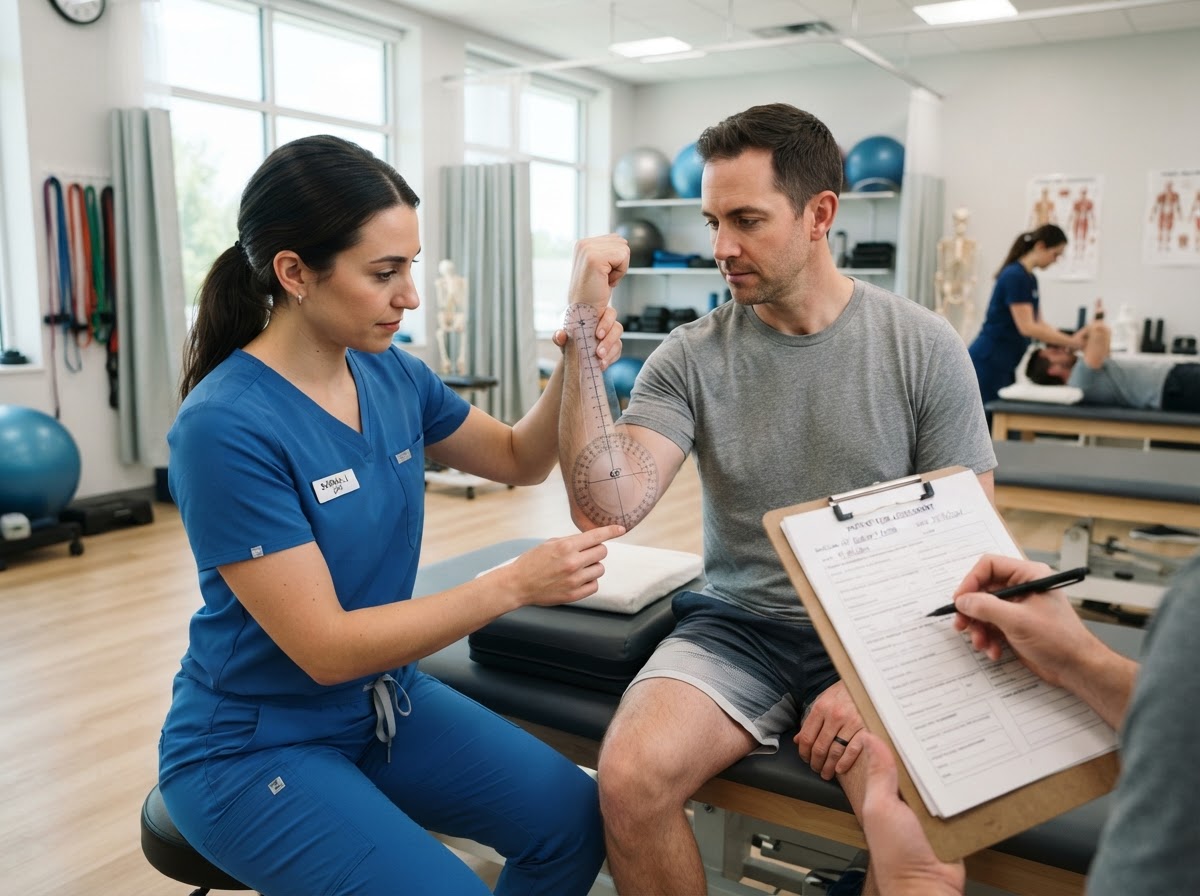
Every angle and strength score is recorded to evaluate progress objectively.
Your numbers, visible
Here is how progress is monitored across sessions. We do not rely on vague impressions; you see the trajectory of your pain, strength, and range of motion.
| Milestone Visit | Pain Score (0–10) | Quad Strength (Lbs Force) | Knee Flexion (Degrees) | Status & Action |
|---|---|---|---|---|
| Visit 1 (Baseline) | 8/10 | 42 lbs (+0 lbs) | 85° (+0°) | Day 1 Baseline set |
| Visit 4 (Week 2) | 6/10 | 58 lbs (+16 lbs) | 102° (+17°) | Load tolerated, increased resistance |
| Visit 8 (Week 4) | 4/10 | 74 lbs (+32 lbs) | 118° (+33°) | Stairs descent achieved pain-free |
| Visit 12 (Graduation) | 1/10 | 95 lbs (+53 lbs) | 132° (+47°) | Goals met; discharged to home plan |
*Sample Progress Chart Notice: This sample chart illustrates how Measured Motion tracks objective outcomes across visits. It is labeled as a sample and does not represent a specific real patient's data. Progress language stays honest: therapy aims to, works toward, and many patients see improvement; results depend on diagnosis and clinical factors.
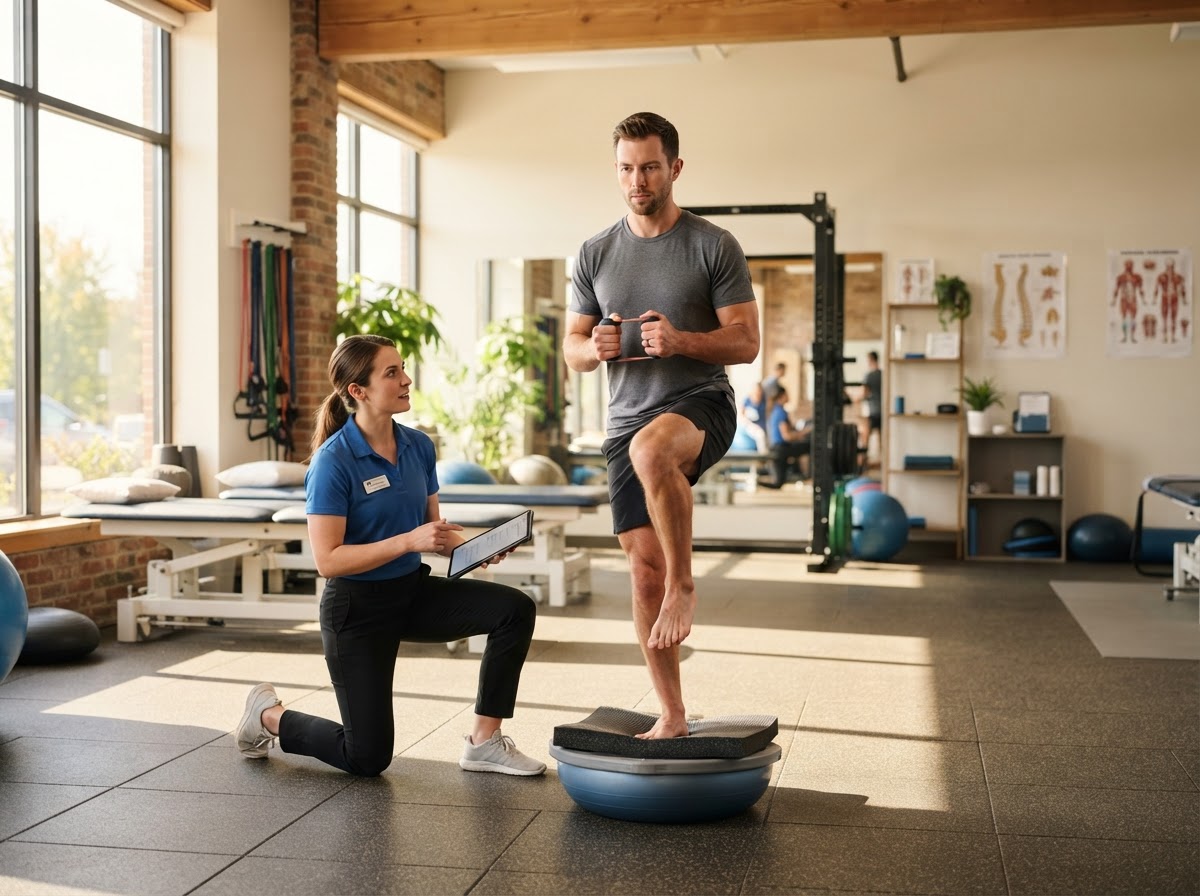
Only exercises that realistically fit into a busy working week are prescribed.
The home plan: exercises that fit a real week
A physical therapy plan only works if it fits the life it has to live in. We do not hand you a generic packet of 15 exercises. We prescribe 2 to 3 high-yield movements, demonstrate them in the clinic, and test that you can perform them independently.
Demonstrated & Written Down
Every repetition is coached so you know the exact tempo, joint angles, and effort required before doing it on your own.
Minimal Equipment Barrier
Calibrated for bands, bodyweight, or standard household furniture. No expensive gym machinery required.
Video Guidance & App Details (Placeholder)
Video guidance and app details are placeholders until the practice confirms what digital tools it provides.
Frequently Asked Questions
Straightforward answers regarding sessions, referrals, insurance, and realistic home exercise expectations.
Request an evaluation
Take the first step toward measurable progress. Share your symptoms and preferred times, and our clinical intake coordinator will contact you to finalize your baseline evaluation appointment.
Notice: Form is a visual placeholder. Connect it to the practice's booking system before launch. Do not tell the patient an evaluation is booked until that connection exists.